 Lex Games
Des blocs gris au premier vrai playtestFrom gray blocks to the first real playtest
Trois semaines de prototype, un virage évité de justesse et dix-huit remarques notées pendant ma première vraie partie.Three weeks of prototype, a detour I backed out of just in time, and eighteen notes taken during my first real playthrough.
Le premier document de design de CoffeeShop Simulator date du 16 septembre 2026. Une page pour dire ce que je veux, puis des dizaines de pages de règles : comment on dose, comment on tasse, combien de temps dure un service, ce qui se passe quand il n'y a plus de lait. La première page, je peux la résumer : ouvrir son petit café, apprendre les gestes du barista et trouver son rythme pendant les rushs.
The first design document for CoffeeShop Simulator is dated September 16, 2026. One page to say what I want, then dozens of pages of rules: how you dose, how you tamp, how long a service lasts, what happens when you run out of milk. That first page boils down to this: open your little café, learn the barista's moves and find your rhythm during the rush.
Des cubes qui font du café
Cubes that make coffee
Les premières semaines, le café n'avait rien d'un café. Tout était fait de formes de base du moteur, simplement teintées : un cube pour la machine, des cylindres pour le reste. Seuls les récipients avaient droit à une coque creuse, pour qu'on voie le niveau du liquide monter. C'était laid, mais ça suffisait pour vérifier l'essentiel : est-ce qu'on a envie de refaire un espresso après le premier ?
For the first few weeks, the café looked nothing like a café. Everything was built from the engine's basic shapes, just tinted: a cube for the machine, cylinders for the rest. Only the containers got a hollow shell, so you could see the liquid level rise. It was ugly, but it was enough to check the one thing that mattered: do you want to pull a second espresso after the first?
Fin septembre, toute la boucle tournait : moulin, tassage, extraction, lait, clients, stocks, bilan du soir et sauvegardes. J'ai même fait jouer 40 journées à un barista virtuel, à trois niveaux (débutant, moyen, expert), pour vérifier que l'économie tenait debout avant d'y jouer moi-même.
By the end of September, the whole loop was running: grinder, tamping, extraction, milk, customers, stock, end-of-day report and saves. I even had a virtual barista play 40 days at three skill levels (beginner, average, expert) to check that the economy held up before I played it myself.
Le jour où j'ai failli changer de jeu
The day I almost made a different game
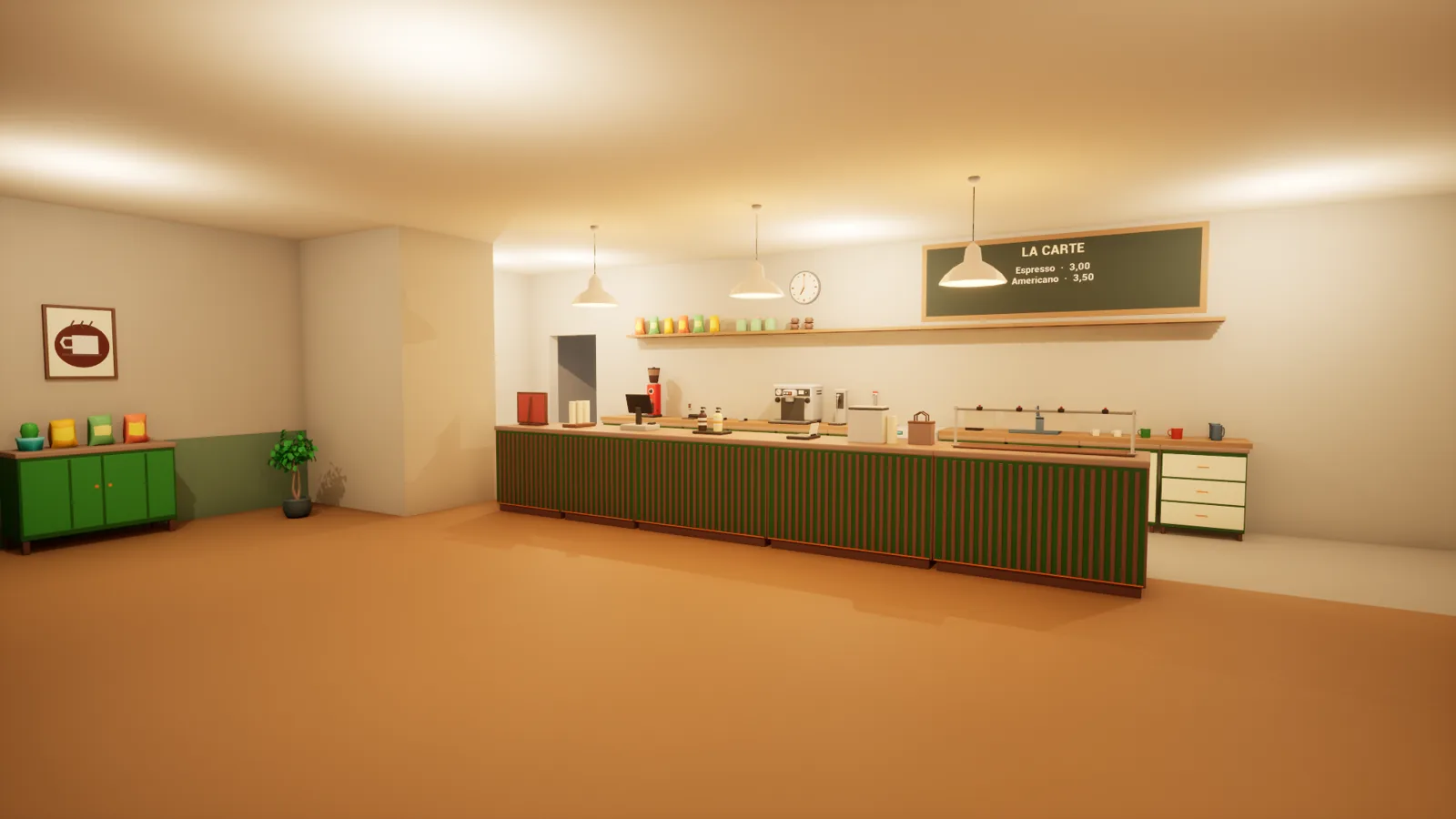
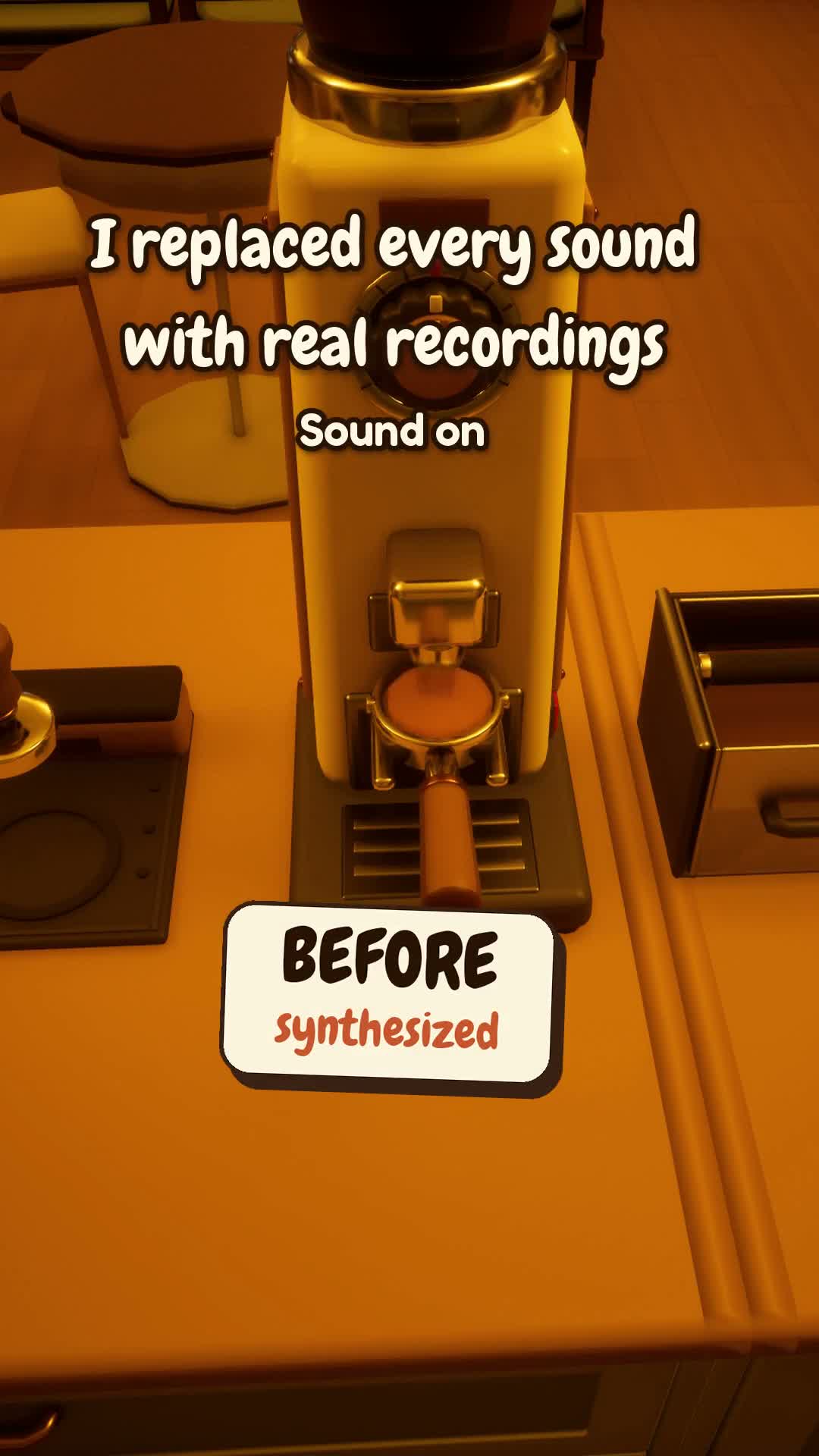
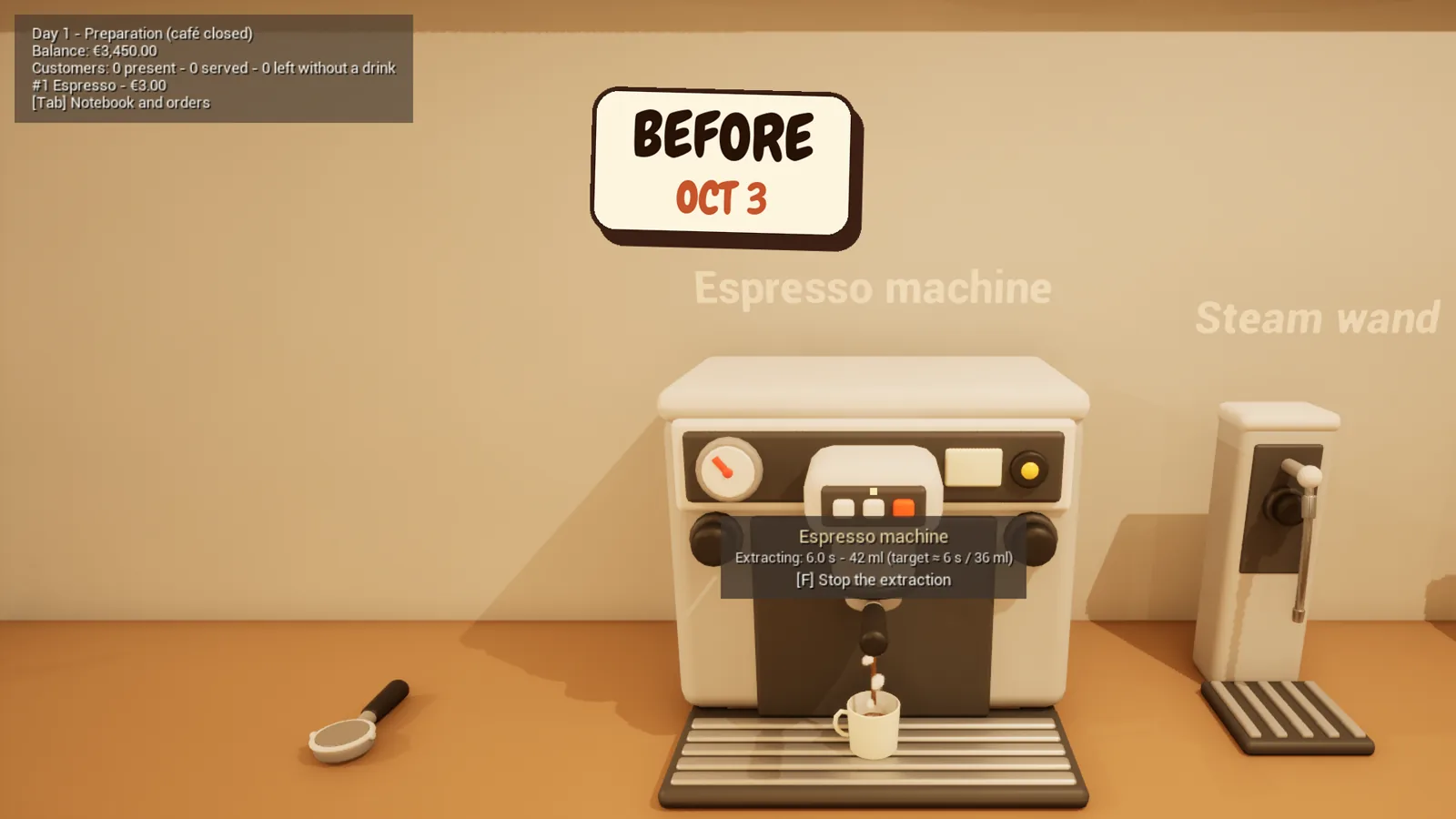
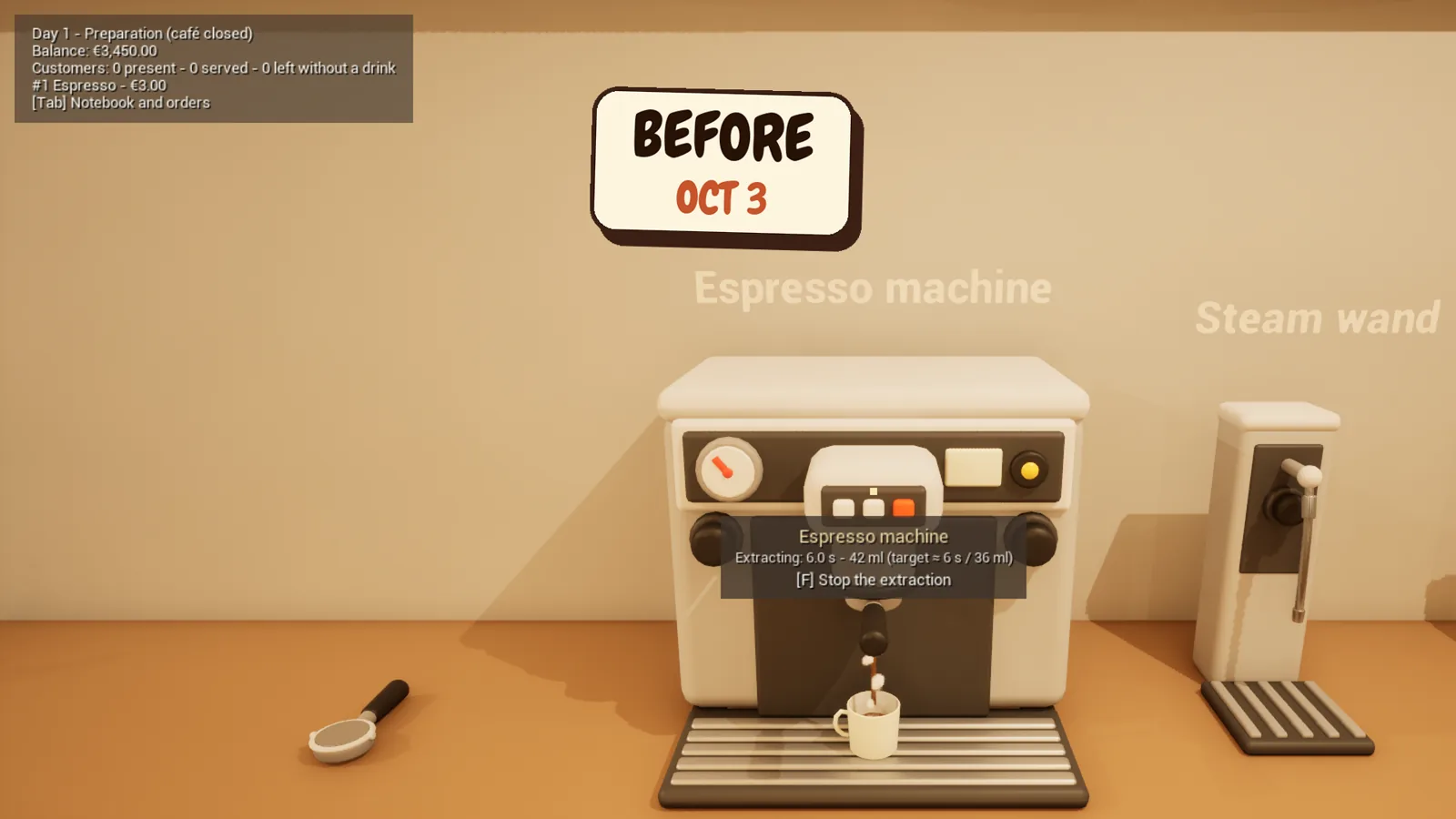
Début octobre, j'ai envisagé une version « choix de carrière » : barista employé ou indépendant, formation chez un patron, embauche de personnages. Je l'ai abandonnée le jour même pour revenir à l'idée de départ : une personne qui veut réaliser son rêve en ouvrant son coffee shop. C'est aussi ce jour-là que les premiers modèles low poly ont commencé à remplacer les cubes, en partant de la machine espresso et de tout ce qui l'entoure.
In early October, I considered a "career path" version: employed or independent barista, training under a boss, hiring characters. I dropped it the same day and went back to the original idea: someone who wants to make their dream come true by opening a coffee shop. That's also the day the first low poly models started replacing the cubes, beginning with the espresso machine and everything around it.
Dix-huit remarques en une partie
Eighteen notes in one session
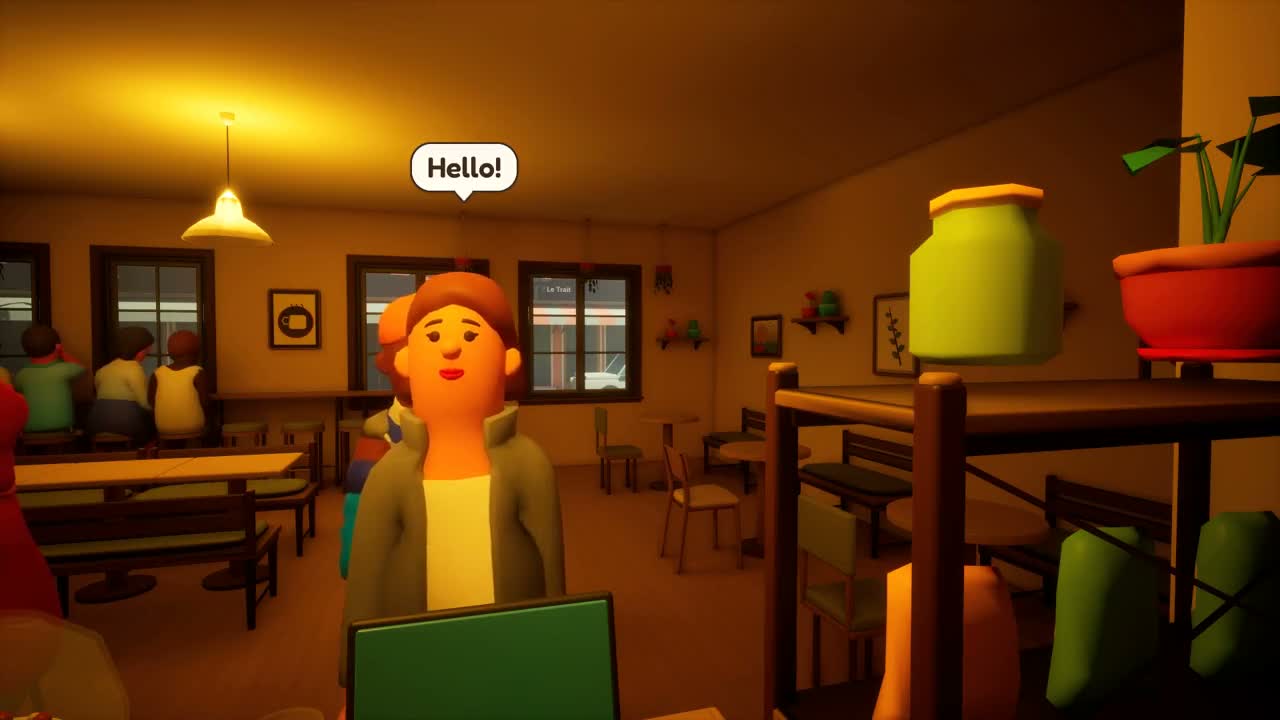
J'ai ensuite lancé ma première vraie partie, passé le tutoriel que je connaissais par cœur, ouvert le café et noté tout ce qui me gênait. J'en ai noté dix-huit. Le premier client a commandé un espresso, s'est arrêté entre la pompe à sirop et le terminal, puis il est parti droit vers le passe, comme si sa commande avait déjà été prise. J'avais l'impression de servir tout le monde avec une seule tasse, et de voir les clients repartir avec. Le rush m'envoyait trop de monde, et les noms qui flottaient au-dessus de l'évier ou du frigo encombraient l'écran pour rien : un objet doit se reconnaître à sa forme.
Then I started my first real playthrough, skipped the tutorial I knew by heart, opened the café and wrote down everything that bothered me. I ended up with eighteen notes. The first customer ordered an espresso, stopped between the syrup pump and the terminal, then walked straight to the pass as if their order had already been taken. It felt like I was serving everyone with a single cup, and watching customers leave with it. The rush sent me too many people, and the names floating above the sink or the fridge cluttered the screen for nothing: an object should be recognizable by its shape.
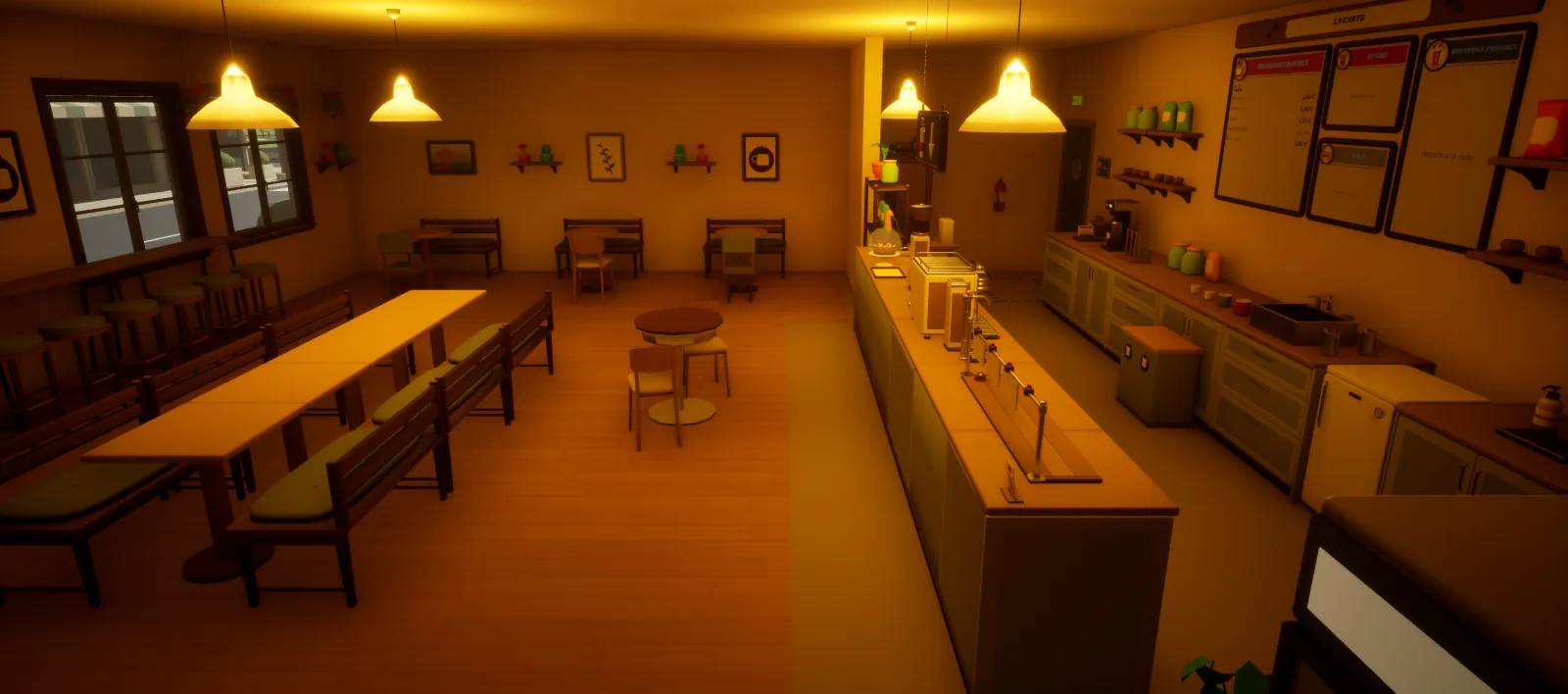
Cette partie a lancé des chantiers qui ont façonné la suite : une vraie prise de commande à la caisse, avec paiement par carte ou en espèces ; de la vaisselle qu'il faut laver, qui s'use et qui peut casser ; des gobelets pour la vente à emporter et des tasses pour la salle ; et l'envie d'un mode construction à la manière des Sims, pour aménager son café comme on meuble son intérieur. J'ai aussi noté ce qui marchait déjà : les petits effets de vapeur et les clients me plaisaient bien.
That session kicked off work that shaped everything after it: real order-taking at the till, with card or cash payment; dishes you have to wash, which wear out and can break; paper cups for takeaway and real cups for the room; and the wish for a Sims-style build mode, so setting up your café feels like furnishing your own home. I also wrote down what already worked: I liked the little steam puffs and the customers.